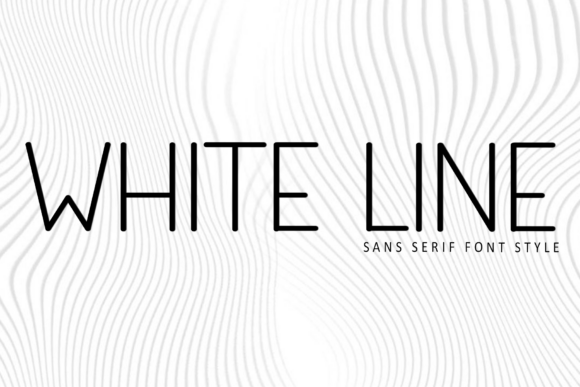
White Line Font Review for Makers
As a creator who spends countless hours tweaking kerning on candle labels and adjusting spacing for printable wall art, finding the right typeface is often the difference between a product that looks amateur and one that feels like a premium brand. White Line is a beautiful and eye-catching font designed with a soft, unique touch that immediately caught my attention during a recent branding project. Its distinctive strokes give it a special character, making it meaningful and versatile for future use in various handmade and digital contexts. When I first loaded this Sans Serif typeface into my design software, I was looking for something that could bridge the gap between modern minimalism and warm, approachable craftsmanship, and White Line delivered exactly that balance among the many Fonts in my library.
Using White Line for Elegant Candle Labels and Boutique Packaging
The first real-world test I conducted with White Line was for a set of soy wax candle labels intended for a boutique home goods shop. In the world of small business packaging, typography does heavy lifting; it communicates scent, mood, and quality before the customer even lifts the lid. White Line is a beautiful and eye-catching font designed with a soft, unique touch that works exceptionally well for short, impactful phrases like "Lavender & Sage" or "Small Batch." Because it is a Sans Serif style, it avoids the ornate clutter that can sometimes make small labels feel busy, yet its distinctive strokes give it a special character that prevents it from feeling sterile or corporate. Among the many Fonts I have tested for packaging design, this one stands out for its ability to maintain legibility while adding a layer of sophisticated charm.
I found that White Line shines when used at medium to large sizes on matte paper stocks. The softness of the letterforms complements natural textures like kraft paper or textured linen labels beautifully. However, as a practical maker, I must note that for very tiny ingredient lists or safety warnings, you should pair White Line with a more utilitarian, high-legibility sans serif. Using it for dense paragraphs is not ideal, as its unique character is best appreciated in headlines, product names, and short taglines. This strategic pairing ensures your White Line headings draw the eye, while the supporting text remains easy to read, creating a professional and trustworthy brand identity.
Designing Wedding Invitations and Stationery with White Line
Moving from packaging to stationery, I explored how White Line performs in wedding invitations and greeting card designs. Couples and event planners are increasingly moving away from traditional, stiff formalities toward designs that feel personal and modern. White Line is a beautiful and eye-catching font designed with a soft, unique touch that fits perfectly into this contemporary aesthetic. Its distinctive strokes give it a special character, making it meaningful and versatile for future use in save-the-dates, welcome signs, and menu cards. As a Sans Serif option, it offers a clean backdrop that allows floral illustrations or watercolor elements to take center stage without competing for attention. When browsing through potential Fonts for bridal suites, this typeface offers a refreshing alternative to overused scripts.
In my mockups, I used White Line for the couple’s names and the date, pairing it with a delicate script font for the body text. This contrast creates a dynamic visual hierarchy that guides the reader’s eye naturally. The font’s open shapes and balanced weight ensure that it reads well even when printed on textured cardstock, which can sometimes swallow finer details of thinner typefaces. For digital invitations sent via email or social media, White Line renders crisply on screens, maintaining its elegance across devices. It is important to check the licensing terms if you are selling editable templates, but for custom design work, this font adds a layer of bespoke quality that clients appreciate.
Creating Printable Wall Art and Digital Downloads with White Line
For sellers of digital downloads and printable wall art, versatility is key. Customers want files that look good in a nursery, a modern living room, or a home office. White Line is a beautiful and eye-catching font designed with a soft, unique touch that adapts seamlessly to these varied interior styles. Its distinctive strokes give it a special character, making it meaningful and versatile for future use in quote prints, affirmation posters, and minimalist decor. As a Sans Serif typeface, it aligns well with current trends in Scandinavian and Japandi design, which favor clean lines and organic warmth. In a market saturated with generic Fonts, this typeface helps your listings stand out in search results and preview images.
I tested White Line on several popular quote formats, such as "Breathe" or "Stay Wild," and found that the font’s inherent softness adds an emotional resonance to the words. It feels inviting rather than commanding. When creating SVG files for cutting machines like Cricut or Silhouette, the paths in White Line are generally clean, but I recommend simplifying nodes if you are cutting at very small sizes to ensure smooth edges. For large-format prints, the font retains its integrity without pixelation or loss of detail. This reliability makes it a solid choice for creators who want to offer a range of sizes without compromising on design quality.
Branding Merchandise: Tote Bags, Mugs, and Apparel
Finally, I evaluated how White Line translates to physical merchandise like tote bags, ceramic mugs, and apparel. These items require typography that is not only aesthetically pleasing but also durable in terms of visual impact. White Line is a beautiful and eye-catching font designed with a soft, unique touch that holds up well on fabric and curved surfaces. Its distinctive strokes give it a special character, making it meaningful and versatile for future use in lifestyle products. Being a Sans Serif, it avoids the intricate loops that can sometimes break down during screen printing or heat transfer processes. Compared to other decorative Fonts, it offers a safer bet for production consistency.
On a canvas tote bag, White Line looked crisp and modern, especially when printed in a contrasting color like charcoal on natural cotton. For mugs, the font’s readability from a distance makes it ideal for short, witty phrases or single-word statements. However, when applying this font to apparel, consider the placement carefully. Because White Line has a distinct personality, it works best as a central design element rather than a subtle detail. Pairing it with simple graphics or leaving it as standalone text allows the typography to speak for itself. Always do a test print to check how the ink interacts with the material, as the soft edges of the font can sometimes appear heavier on absorbent fabrics.
In conclusion, White Line is a valuable addition to any maker’s toolkit. It balances artistic flair with functional clarity, making it suitable for a wide array of creative projects. Whether you are designing packaging, stationery, digital art, or merchandise, this font provides the polished, professional look that helps handmade businesses thrive. By understanding its strengths and limitations, you can leverage White Line to create cohesive, appealing, and memorable brand experiences.