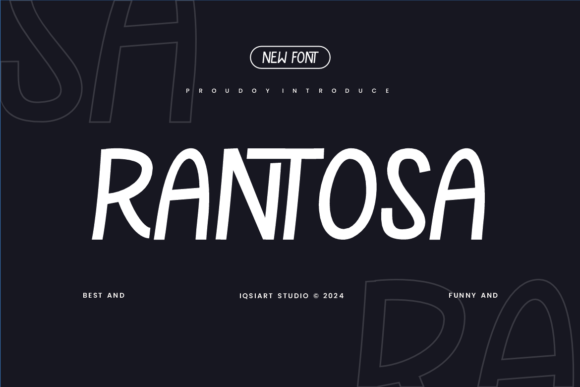
Rantosa: Bold Display Font for Crafters
Rantosa is a bold and quirky display font with a hand-drawn, dynamic style that immediately catches the eye of any maker looking to elevate their product line. As a creator who spends hours designing labels, stickers, and printable templates, I know how crucial it is to find Fonts that balance personality with professionalism. This unique Sans Serif typeface offers uneven strokes and a playful vibe, making it an ideal choice for creative projects like posters, headlines, branding, and social media designs that need to stand out in a crowded marketplace.
Using Rantosa for Handmade Product Labels and Packaging
When you are selling physical goods, from artisanal candles to homemade soaps, your packaging is the first handshake with your customer. Rantosa brings a distinct energy to label design that standard Fonts simply cannot match. Because it is a Sans Serif with irregular, hand-drawn characteristics, it mimics the authentic feel of handwritten notes while maintaining the structural integrity needed for clear reading. Imagine applying this font to a kraft paper sticker on a jar of local honey or a minimalist tag on a linen tote bag; the uneven strokes add a layer of warmth and human touch that mass-produced items lack. For small shop owners, using a display font like this helps establish a brand identity that feels approachable and curated. It works exceptionally well for short phrases, product names, or key ingredients, ensuring that the most important information pops without overwhelming the design.
Creating Eye-Catching Wedding Invitations and Stationery
The wedding industry thrives on aesthetics, and couples are constantly seeking invitations that break away from traditional, stiff typography. Rantosa serves as a fantastic option for modern, eclectic, or bohemian wedding themes where personality is prioritized over formality. While many designers reach for delicate scripts, this bold Sans Serif offers a refreshing alternative for headlines and couple names on save-the-dates, welcome signs, and menu cards. Its dynamic style ensures that the text remains legible even from a distance, which is crucial for large-format prints like venue signage. When paired with a clean, neutral body text, Rantosa anchors the design with confidence. It allows stationery designers to create cohesive suites that feel custom-made rather than template-derived. The playful vibe of the font can soften the formal nature of wedding correspondence, making guests feel welcomed and excited about the celebration ahead.
Designing Social Media Graphics and Digital Branding
In the digital realm, attention spans are short, and visual impact is everything. Rantosa is perfectly suited for social media de signs, particularly for Instagram stories, Pinterest pins, and YouTube thumbnails where text needs to be read quickly on small screens. As a Sans Serif display font, it retains clarity even when scaled down, a common issue with overly decorative script fonts. For online sellers and content creators, consistency in branding is key to recognition. Using Rantosa across your digital assets creates a recognizable visual language. Whether you are announcing a flash sale, sharing a behind-the-scenes look at your studio, or promoting a new digital download, the bold strokes of this font command attention. It transforms ordinary announcements into engaging graphics that encourage clicks and shares. The hand-drawn quality adds a layer of authenticity that resonates with audiences tired of polished, corporate-style advertising.
Optimizing Rantosa for Cutting Machines and Vinyl Crafts
For Cricut and Silhouette users, the technical performance of a font is just as important as its aesthetic appeal. Rantosa performs admirably in cutting applications, provided you understand its display nature. Because it features uneven strokes and a dynamic style, it is best used for larger cuts such as wall decals, wooden sign stencils, or iron-on transfers for t-shirts. When working with intricate vinyl cuts, always preview your design to ensure that the thicker parts of the letters do not bridge unintentionally. This Sans Serif font is not ideal for tiny, intricate details in small sticker designs, but it shines in medium-to-large applications where its quirks become features rather than bugs. Hobbyists creating farmhouse-style home decor will appreciate how the font’s imperfect lines complement rustic materials like reclaimed wood or distressed metal. By adjusting the size and spacing, you can achieve clean cuts that highlight the font’s playful character without sacrificing structural integrity.
Pairing Rantosa with Other Typefaces for Balanced Designs
No font exists in a vacuum, and knowing how to pair Rantosa with other Fonts can unlock its full potential. Since it is a bold, quirky display font, it pairs beautifully with simple, understated typefaces that do not compete for attention. A classic, thin Sans Serif or a lightweight serif font works well for body text, allowing Rantosa to take center stage as the headline element. Avoid pairing it with other hand-drawn or highly decorative scripts, as this can create visual clutter and reduce readability. Instead, let the dynamic style of Rantosa provide the personality, while a neutral companion font handles the informational heavy lifting. This contrast creates a professional hierarchy in your designs, whether you are laying out a printable planner page or designing a product catalog. Experimenting with font weights and sizes can help you find the perfect balance, ensuring that your final product looks cohesive and thoughtfully designed.
Understanding Commercial Licensing for Craft Businesses
Before incorporating Rantosa into your commercial projects, it is essential to review the licensing terms provided by the creator. Most premium fonts offer specific licenses for personal and commercial use, which may cover physical products, digital downloads, and client work. As a small business owner, ensuring you have the correct license protects your brand and respects the intellectual property of the type designer. Typically, a standard commercial license allows you to use the font on items you sell, such as printed invitations, branded packaging, and merchandise. However, if you plan to embed the font in a web application or redistribute it as part of a template, you may need an extended license. Always check the included file formats, such as OTF, TTF, or WOFF, to ensure compatibility with your design software and workflow. Investing in properly licensed Fonts is a fundamental step in building a sustainable and ethical creative business.